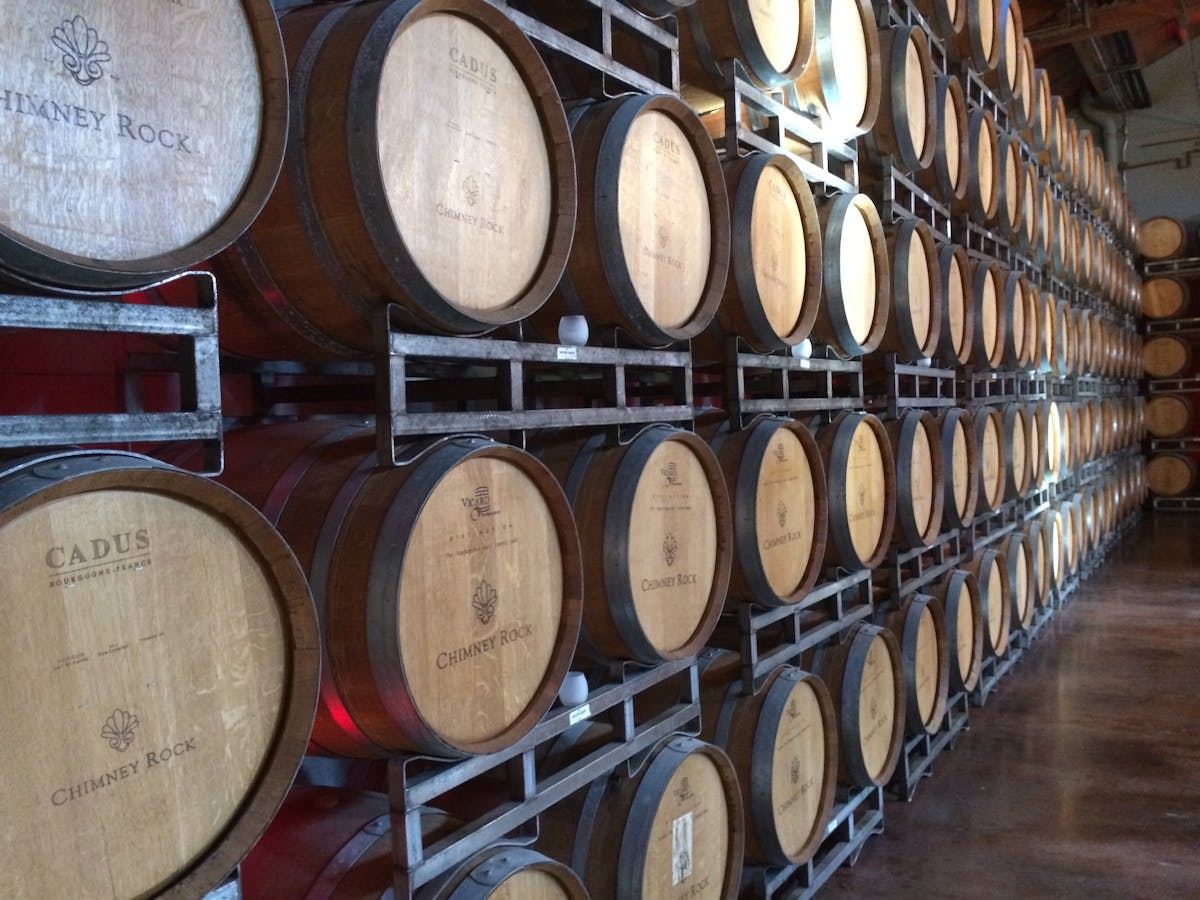
Every barrel of ageing spirit loses a portion of its contents to evaporation each year — a phenomenon romantically known as the "angel's share." In the cool, damp warehouses of Scotland, this loss amounts to roughly 2% per year. In the tropical heat of the Caribbean, it can reach 6-8% annually. This seemingly simple difference in evaporation rate has profound implications for the character, economics, and perception of aged rum.
The Science of Tropical Ageing
Temperature is the primary driver. In the Caribbean, warehouse temperatures regularly exceed 30°C, and the diurnal temperature range — the difference between day and night — can be significant. This temperature cycling causes the spirit to expand into the wood during the heat of the day and contract back as the air cools, creating a pumping action that drives interaction between the rum and the oak. The result is that a rum aged for five years in Barbados or Jamaica has had far more oak contact than a whisky aged for five years in Scotland — and the flavour profile reflects this dramatically.
Humidity also plays a role. In the Caribbean's humid climate, the angel's share tends to be disproportionately alcohol rather than water, meaning that the strength of the rum decreases faster than it would in drier climates. This natural reduction can be seen as a positive — the rum mellows and integrates without the need for aggressive dilution — but it also means that very old tropical rums can drop below bottling strength, requiring careful management.
The Economic Reality
The accelerated angel's share creates a significant economic challenge for Caribbean rum producers. A barrel that starts life holding 200 litres might contain only 80-100 litres after twelve years in a tropical warehouse. Compare this to a Scottish distillery, where the same barrel might still hold 150 litres after twelve years, and the cost implications become clear. A twelve-year-old tropical rum represents a far greater sacrifice of spirit — and a far greater investment of capital — than a twelve-year-old Scotch.
This is why many rum advocates argue that age statements on tropical rums should be evaluated differently from those on European spirits. A twelve-year-old Barbadian rum has, in terms of oak interaction and spirit loss, more in common with a twenty-five-year-old Scotch than with a twelve-year-old one. The argument has merit, and it goes some way toward explaining why premium aged rums can command prices that rival aged whiskies despite shorter stated ageing periods.
High-Altitude Ageing: The Zacapa Model
Some producers have sought to mitigate the angel's share by ageing at altitude. Ron Zacapa, famously, ages its rums at 2,300 metres above sea level in the mountains of Guatemala, where the cooler temperatures slow evaporation significantly. This approach produces a different ageing profile — slower, more gradual, with less aggressive oak extraction — and the resulting rums have a distinct smoothness that differs markedly from sea-level tropical ageing. Whether this is "better" is a matter of taste; what is certain is that it produces a fundamentally different spirit.
The Continental Finish
An increasingly popular technique involves "continental ageing" — shipping barrels of Caribbean rum to Europe for a finishing period in cooler conditions. Plantation is perhaps the best-known practitioner of this approach, with founder Alexandre Gabriel ageing rums initially in the Caribbean before transferring them to French oak casks in Cognac. The theory is that the tropical ageing provides intensity and depth, while the continental finish adds refinement and integration. It is a controversial technique — some view it as the best of both worlds, while others see it as an unnecessary complication that distances the rum from its terroir.
What the angel's share debate ultimately reveals is that ageing is not a single, universal process but a dialogue between spirit and environment. The same rum, aged in the same barrel, would taste profoundly different after twelve years in Jamaica versus twelve years in London. The tropical angel's share is not merely a cost to be managed — it is a fundamental element of what makes Caribbean rum taste the way it does. It is, in a very real sense, part of the recipe.