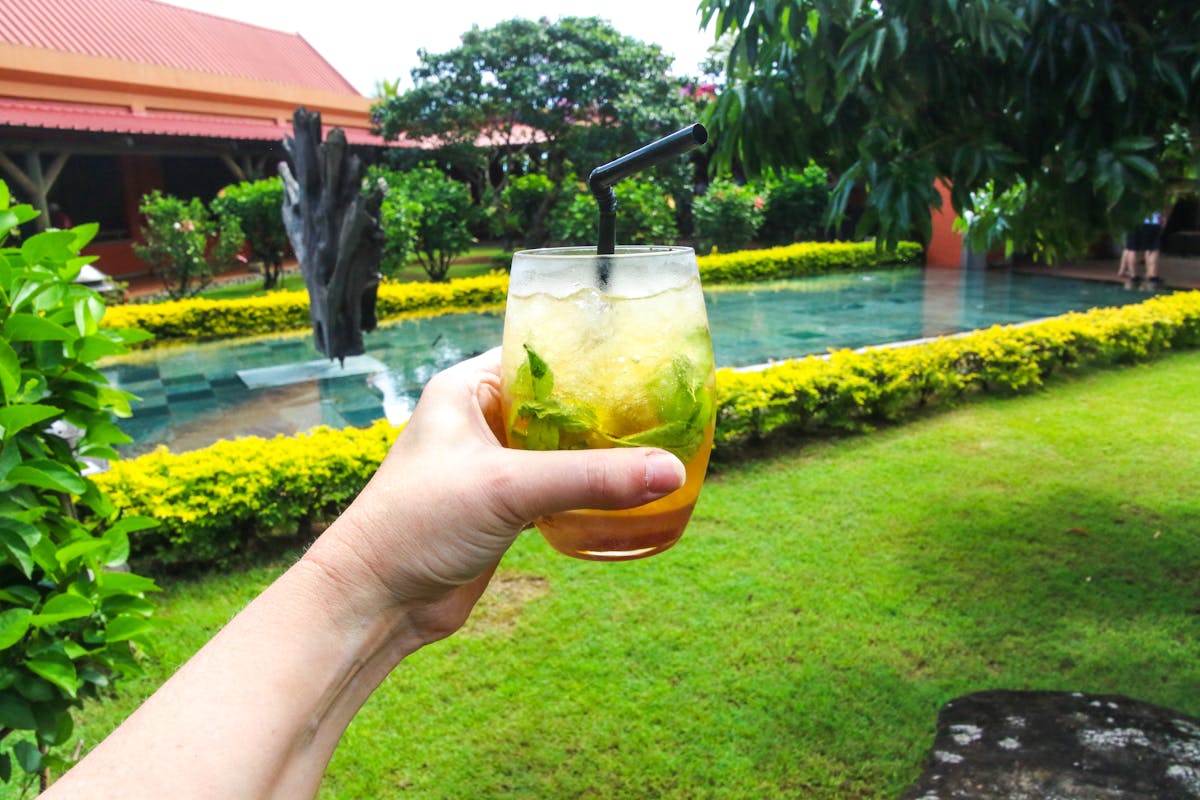
Before the cocktail, before the highball, before the Daiquiri and the Mai Tai and every tiki creation that followed — there was punch. And punch, in its original form, was a rum drink. The word itself likely derives from the Hindi "panch," meaning five, referring to the five ingredients that defined the drink: spirit, citrus, sugar, water, and spice. British sailors and traders encountered punch in India in the early 17th century, adopted it enthusiastically, and carried the concept back to England and across the Caribbean, where rum replaced arrack as the base spirit.
By the late 1600s, rum punch was the social lubricant of the British Empire. It was served at political gatherings, naval celebrations, merchant meetings, and private parties. The recipe was codified in a simple rhyme that every sailor knew: "One of sour, two of sweet, three of strong, four of weak" — lime juice, sugar, rum, and water, in that ratio, with nutmeg grated on top.
The Golden Age of Punch
The 18th century was punch's golden age. Enormous punch bowls — some holding dozens of litres — were centrepieces at fashionable London parties. The quality of your punch spoke to your status and taste. Wealthy hosts used the finest Jamaican pot still rum, fresh limes from the West Indies, and Demerara sugar. Elaborate silver punch bowls, ladles, and cups became status symbols.
Charles Dickens was a famous punch enthusiast, reportedly serving his own recipe at dinner parties. The drink appears throughout his novels, always associated with warmth, fellowship, and good cheer. In "A Christmas Carol," the Cratchit family's Christmas punch — humble as it is — represents the joy of shared celebration.
The Caribbean Tradition
While London's punch culture eventually gave way to individual cocktails, punch never lost its place in the Caribbean. In Barbados, Jamaica, and Trinidad, rum punch remains the default social drink — mixed in large batches, served at every gathering from beach parties to Sunday dinners. Each island has its own variation: Barbadian punch tends to be sweeter and heavier on nutmeg; Jamaican punch is funkier, using the island's distinctive pot still rums; Trinidadian punch often incorporates Angostura bitters.
The Bajan recipe — "one of sour, two of sweet, three of strong, four of weak" — is still the foundation, though modern versions often substitute fruit juice for plain water, creating richer, more complex drinks. A good Caribbean rum punch is a thing of beauty: balanced, refreshing, deceptively strong, and impossible to drink just one glass of.
Making Great Punch Today
The secret to great punch is balance and quality ingredients. Use a good aged rum — something with character and depth, not a neutral white spirit. Fresh lime juice is non-negotiable; bottled juice will ruin your punch. For the sweet element, Demerara sugar or a rich sugar syrup adds more complexity than white sugar. And don't skip the spice — freshly grated nutmeg is traditional and essential, but allspice, cinnamon, and even a few dashes of Angostura bitters all have their place.
Punch is meant to be shared. It's a communal drink, mixed in large batches and ladled into cups. There's something beautiful about its simplicity and its sociability — qualities that have kept it alive for four hundred years. In an age of ever-more-complicated cocktails, punch reminds us that the best drinks are often the simplest.